


If you've ever watched your cat scale a bookshelf or shred the corner of your sofa, you already know they crave vertical territory. A well-chosen cat tree channels those instincts into a safe, dedicated space - and saves your furniture in the process. This guide walks you through every factor that matters: types, materials, sizing for large breeds, multi-cat setups, and placement tips that actually get your cat using the tree.
Key Takeaways
Cat trees give cats the vertical space they need to climb, scratch, and sleep, helping protect your furniture and reducing stress. A cat tower isn't a luxury - it's a functional piece of cat furniture that addresses real behavioral needs.
-
Exercise and energy: A tall cat tree helps keep energetic cats active and channels nighttime "zoomies" into daytime climbing.
-
Mental stimulation: Elevated perches let cats survey their surroundings, watch birds, and stay engaged with the world around them.
-
Safe retreat: Private condos and hideaways provide a calm escape from guests, dogs, or toddlers.
-
Less furniture damage: Dedicated scratching posts redirect natural scratching away from your sofa and curtains.
Cat trees should match a cat's size, activity level, and favorite behaviors. Different designs suit different needs - small spaces, multiple cats, and large cats like Maine Coons or Ragdolls each demand specific features. Prioritize sturdiness, height, and materials when choosing a cat tree, because durable materials, a wide base, and tall scratching posts are non-negotiable for safety and longevity.
Why Every Cat Benefits from Cat Trees
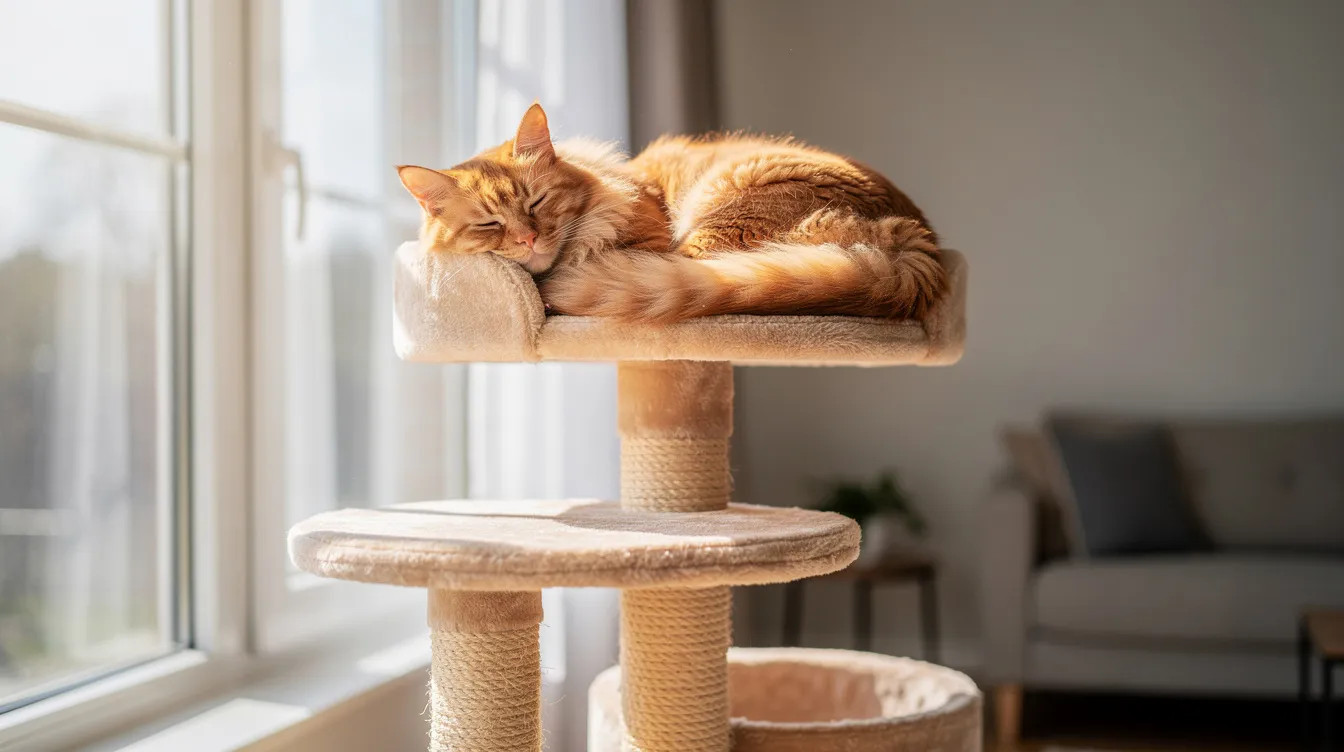
Modern indoor cats in 2026 need vertical territory as much as they need food bowls and toys. Without places to climb, perch, and hide, indoor cats lose access to the environmental complexity their instincts demand. A systematic review of indoor cat welfare found that vertical resting spaces and hiding spots are among the most effective forms of environmental enrichment for reducing stress. Cat trees provide a dedicated space for climbing and scratching, and they help reduce boredom and provide exercise for cats who would otherwise have no outlet.
A well-designed cat tree supports natural feline behaviors by mimicking the safety and vantage points cats would get from trees or high rocks in nature. Think about the daily scenarios: your cat perching near a window to watch squirrels, retreating into a condo when guests arrive, or choosing an upper platform to stay clear of a toddler or dog. Cat trees also create comfortable resting spots for cats - a place where they can curl up without competing for the couch. They prevent cats from climbing on shelves and scratching furniture because the tree gives them a better, more satisfying alternative.
Age and mobility influence the type of cat tree suitable for a pet cat. Senior or older cats dealing with joint stiffness benefit from lower perches and ramps that let them climb without painful jumps. Meanwhile, energetic young kitties burn off excess energy on multi-level towers, which can dramatically reduce those 2 a.m. sprinting sessions. Indoor cats with enrichment like cat trees tend to live longer, safer, and happier lives, partly because mental stimulation and physical activity keep both body and mind sharp.
Types of Cat Trees and Cat Towers
The terms "cat tree," "cat tower," and "cat condo" are often used interchangeably, but they differ slightly. Towers tend to emphasize height with multiple tiers. Condos focus on enclosed hiding spaces. Trees usually combine both with branch-like posts and platforms.
Here's how the main categories break down:
|
Type |
Best For |
Typical Height |
|---|---|---|
|
Standard multi-level tree |
Active single cats, apartments with limited floor space |
48–72 inches |
|
Wide, low tower |
Large cats, older cats who prefer stability |
40–60 inches |
|
Wall-mounted / modular system |
Small homes, studios, cats who love to explore |
Varies by setup |
|
Multi-cat tree with dual condos |
Households with multiple cats |
60–72+ inches |
|
Designer wooden cat furniture |
Owners wanting stylish cat trees that blend with home décor |
40–60 inches |
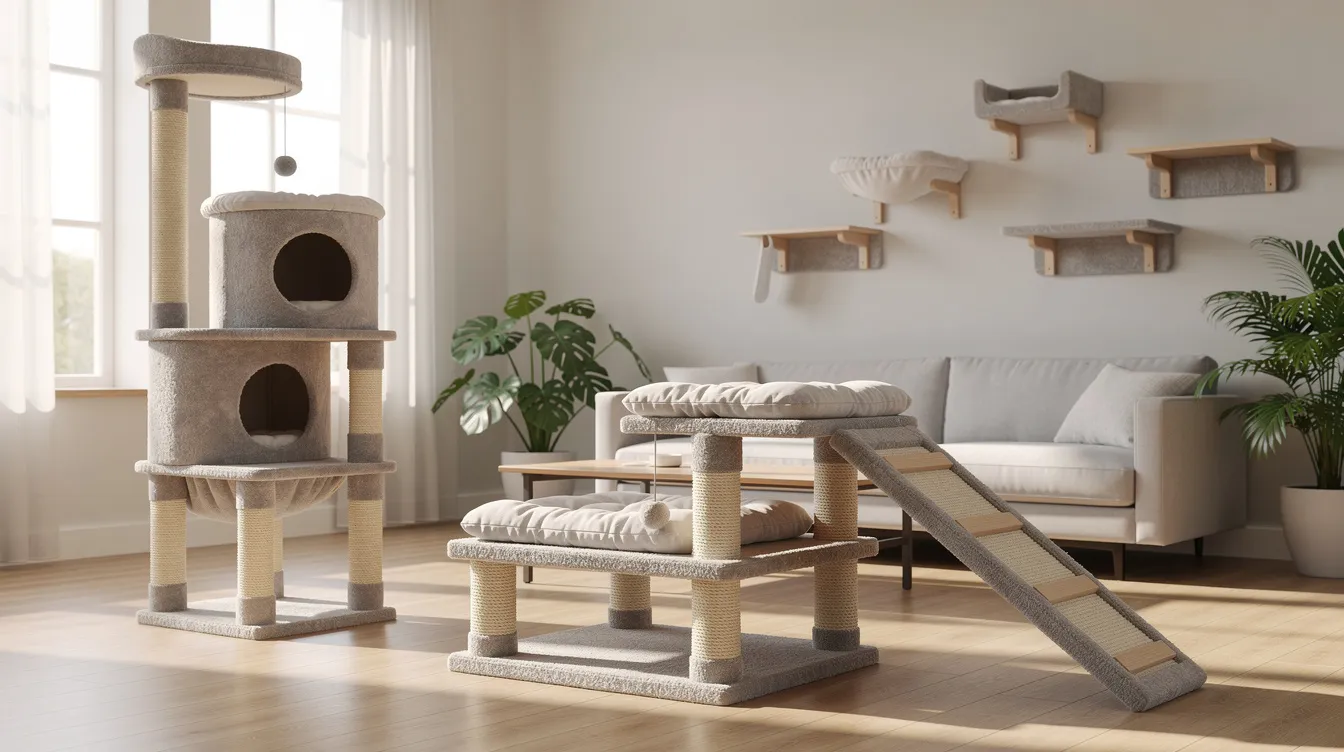
Tall cat trees in the 48-to-72-inch range are preferred by cats for climbing and surveying their room. For small spaces, wall-mounted shelves combined with a compact tree offer vertical space without crowding the floor. Wooden cat trees are often more durable than plush models - solid hardwood frames resist moisture and scratching far better than particleboard covered in carpet, which tends to look pretty worn within months.
Key Features to Look For (Especially for Large Cats)
Every feature on a cat tree connects directly to safety, comfort, and how long the structure will realistically last under daily use. Durable surfaces help withstand daily use by active cats, so cutting corners on materials means replacing the entire tree sooner.
Base width and stability: A wide and heavy base prevents tipping in cat trees for large cats. The rule of thumb: base footprint should be at least one-third of the tree's total height. For a 72-inch tower, that means a base of roughly 24 inches wide. Stability is crucial - choose trees with wide bases, especially when a large cat launches off the top perch.
Post height and scratching: Ideal post height should let an average adult cat fully stretch - front paws reaching up, back legs extended - which means 24-to-32-inch posts are recommended. Durable scratching materials like sisal rope help maintain claw health. Sisal fabric tends to outlast sisal rope, which can shred within three to six months of heavy use. Look for thicker scratching posts to prevent wobbling.
Platform and condo sizing: Measure your cat from nose to base of tail, then find platforms significantly larger than that measurement. For cats over 15 lbs, platforms of at least 16×16 inches and condo openings of 10 inches or more prevent cramped sleeping spots. Larger cat breeds need wide platforms and higher weight capacities in cat trees.
Materials matter: Quality materials, such as solid wood, ensure durability in cat trees. Real wood (pine, birch, cedar) outperforms particleboard on every front - it resists moisture, holds screws tighter, and lasts years longer. Heavy cat trees require thicker support pillars to prevent wobbling, ideally with metal hardware at joints rather than plastic.
Extra features: Features such as hidden houses and hammocks should match a cat's personality. Ramps help older cats access higher levels. Removable and washable materials make maintaining cat trees easier - look for zip-off covers and machine-washable cushions. Built-in toys add mental stimulation but shouldn't compromise the tree's balance.
Choosing a Cat Tree for Multiple Cats
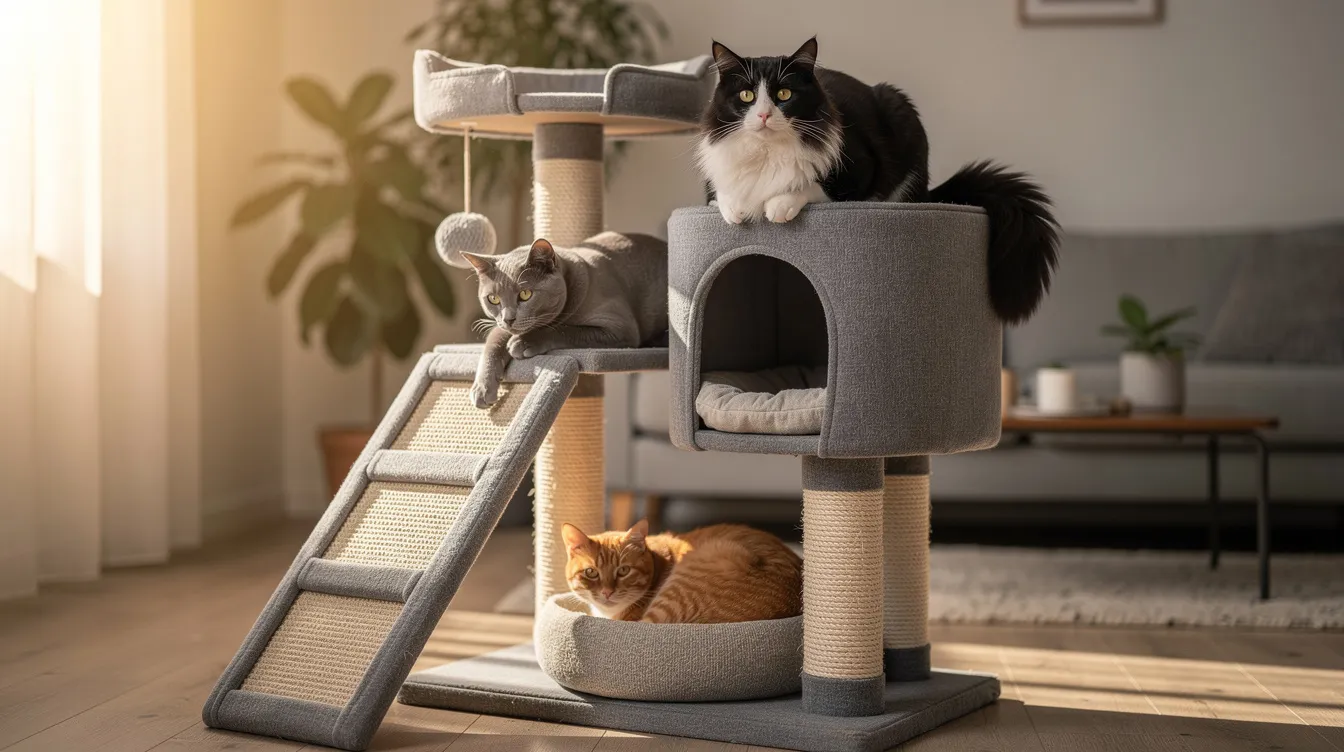
Multi-cat households face specific challenges: competition over the highest perch, resource guarding of sleep spots, and stress from feeling cornered. Cats prefer multiple elevated perches to prevent territorial disputes. Without enough resting options and escape routes, even bonded cats can develop conflict. Multi-cat trees must focus on stability, space, and verticality.
Key guidelines for households with multiple cats:
-
Cat trees should have enough resting spots for the number of cats in the home - aim for at least one spot per cat, plus one spare.
-
Multiple sisal-wrapped posts allow cats to scratch without competition. Place scratching zones on different levels and angles.
-
Varied heights and clear movement paths ensure timid cats can move without being blocked by bolder companions.
-
Private hideaways help provide retreat spaces for shy cats in cat trees.
Example layout: A 5-level cat tower with two enclosed condos (ground level and mid-level), three open perches, and sisal posts at multiple heights can comfortably host three cats. A solid foundation supports the weight of multiple cats on a cat tree - for three large cats, look for a total capacity of 70 lbs or more with a base of at least 24×24 inches.
If your cats are very territorial and don't like sharing space, two medium cat trees placed in separate rooms often works better than one massive structure.
Best for Large Cats and Heavy Breeds
Large cats like Maine Coons, Norwegian Forest Cats, and Ragdolls can weigh 20 lbs or more and quickly destroy flimsy cat trees. Choose cat trees with strong construction for larger cats - anything built on thin particleboard with narrow posts will wobble, lean, or break within weeks.
Structural requirements for a large cat:
-
Post diameter of at least 4 inches (10 cm) with sisal wrapping
-
Solid wood or reinforced engineered wood base
-
Metal bolts and screws at all critical joints - no reliance on glue or plastic dowels
-
Models for large cats should have thicker scratching posts
A stable base is crucial for cat trees for large cats. For platforms, a 20 lb cat needs at least 16×18 inches to stretch and curl comfortably, with condo interiors of 18×18 inches and entry holes of 10 inches or wider.
Height vs. stability: A 72-inch tower works well for active large breeds in a room with standard 8-to-9-foot ceilings - but only if anchored properly. For especially heavy or older cats, a 50-to-60-inch heavy-platform design offers safer access without risky jumps. The PAWZ Road 72-inch cat tree is a top pick for large cats who love to climb. For owners wanting the biggest possible setup, the Royal Cat Palace Blackline is Cat Tree King's largest model.
Always check maximum weight ratings per perch and per hammock, and read owner reviews from people with large cats as a reality check - many sellers exaggerate specifications. Cat trees for large cats often cost more upfront but usually outlast several budget models, making them a better long-term investment worth the money.
Placement, Setup, and Safety Tips
Even the best cat tree can be ignored or become unsafe if placed in the wrong spot or if you assemble it poorly. Placement of a cat tree affects its usage by cats - get this wrong and you've bought an expensive piece of furniture your cat spends zero time on.
Ideal locations:
-
Near a window with a bird feeder outside - placing a cat tree near a window often enhances its appeal to cats. Additionally, placing a cat tree near a window increases environmental enrichment for cats.
-
In the living room where the family gathers, so your cat can observe surroundings from a safe, elevated spot.
-
In a quiet corner for shy cats who need a calm place to retreat and find peace.
Position away from hazards: unstable shelves with breakable items, drafty doors, and heater vents that could overheat a sleeping cat. For reference, direct sunlight through a window is fine in moderation but avoid spots where a cat has no way to move into shade.
Anchoring: Attach tall towers to the wall using L-brackets or included safety straps. This is non-negotiable in homes with children or energetic large cats who jump with force.
Assembly and maintenance:
-
Lay out all parts and hardware before starting - don't worry if it looks overwhelming; most trees assemble in 30–60 minutes.
-
Tighten every screw fully and check for wobble before letting your cat on.
-
Re-tighten all fasteners after the first week, as settling loosens connections.
-
Run a quick monthly safety check: inspect posts for frayed sisal, look for broken platforms or exposed staples, and confirm the base remains stable and sturdy.
Helping Your Cat Love Their New Cat Tree
Some cats jump onto a new cat tower immediately. Others give it a green light only after days of suspicious sniffing. Both responses are perfectly normal - most cats need time to accept new cat furniture in their home, so don't assume the tree is a failure after day one.
Practical techniques to encourage exploration:
-
Place your cat's favorite soft blanket on a mid-level perch so it smells familiar.
-
Use play sessions with a wand toy to guide climbing - drag it across platforms, up posts, around condos.
-
Feed treats on different levels so your cat associates each perch with a reward.
-
Try catnip or silvervine on scratchers for receptive cats.
Respect nervous cats. Some may need time before they seem comfortable or give you the sense they’ve thought the tree over and decided it feels safe and appealing. No forcing paws onto platforms, no chasing them up and down, and keep the area calm. Some kitties need several weeks to fully warm up, and that's perfectly fine.
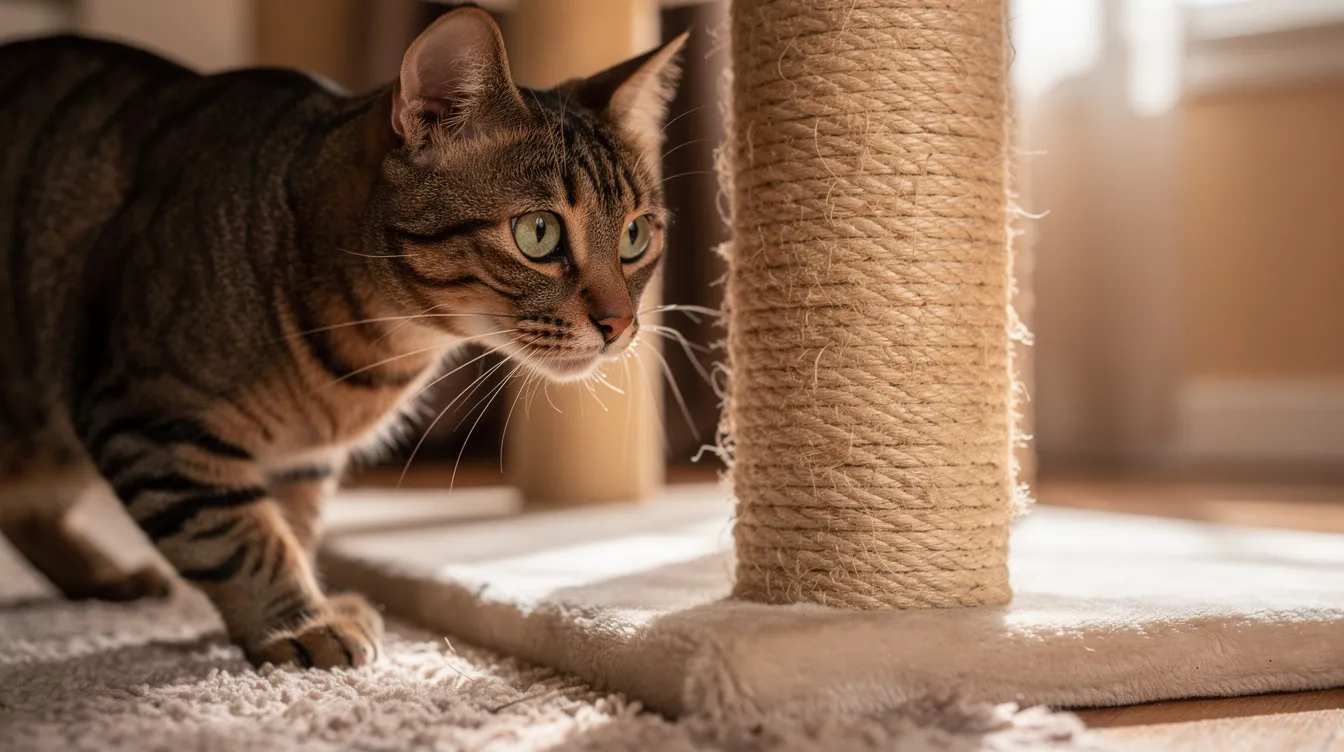
To redirect scratching from your sofa to the tree, place the tree near the furniture your cat currently scratches, use temporary sofa protectors, and praise your cat every time those paws hit sisal. Permission to scratch is built into the tree - help your cat discover that.
FAQ
These questions address concerns not fully covered above, based on what cat owners commonly ask when shopping for their first cat tree. If you can't find your answer here, the sections above cover most factors in detail.
How long does a good cat tree usually last?
Lifespan ranges from about 1–2 years for light budget models purchased at a sale price to 5–8+ years for solid wood or heavy-duty cat trees. Factors that shorten lifespan include multiple cats, large cats, frequent climbing, and very soft plush fabrics that flatten or tear. Wooden frames built with sturdy materials hold up dramatically longer. Check if the brand or sellers offer replacement posts or platforms - being able to swap out a worn scratching section without replacing the whole tree saves money and keeps your investment in stock longer.
What is the right height for a cat tree in an apartment?
For small apartments, 40–60 inches is the ideal range. Standard rooms with 8-to-9-foot ceilings can handle 60–72-inch towers comfortably. The top perch should sit high enough for a view but leave at least 12–18 inches of clearance from the ceiling so your cat doesn't feel cramped. In very tight spaces, a medium tree combined with wall shelves can provide more vertical territory without a large footprint taking over your room. Many ship flat-packed and are easy to assemble even in tight quarters.
Can kittens and senior cats use the same cat tree safely?
They can share a tree if it includes easy access routes - ramps, stairs, or closely spaced levels instead of only big gaps that require a powerful jump. Avoid very wobbly or extremely tall, unanchored towers for seniors and small kittens to reduce fall risk. Provide at least one lower, comfortable bed or condo so an older cat doesn't have to climb to the top to enjoy the tree. A cat tree with varied level heights is the perfect happy medium that keeps both age groups safe.
How do I clean and maintain a cat tree?
A simple routine keeps things hygienic and extends the tree's life:
-
Weekly: Vacuum all platforms, condos, and hammocks to remove fur and dust.
-
As needed: Spot-clean stains with pet-safe cleaners and wash removable covers according to their labels.
-
Every few months: Do a deeper clean - unscrew parts if necessary to reach corners, and check for mold or lingering odors.
Replace or repair when you see frayed sisal that exposes sharp staples, broken or sagging platforms, or heavily compressed beds that no longer support your cat. A well-maintained tree that your cat loves is one of the great investments you can make for a happy, healthy home. If the edgesuite of a perch starts cracking, it's time for a cart full of replacement parts - or a new tree built to last.
Find the Perfect Cat Tree for Your Cat’s Lifestyle
Complete your cat's vertical space with a cat tree that's built for both comfort and durability. Whether you're furnishing a cozy apartment or a busy multi-cat home, Michu offers a cat tree to suit every lifestyle. The Michu Ivy Cat Tower is perfect for everyday climbing, scratching, and lounging with its modern, space-saving design. For households with multiple cats or larger breeds, the Michu Luna Multi-Layer Solid Wood Cat Nest Tree provides generous platforms, sturdy solid wood construction, and plenty of room to explore. If you're looking for a statement piece, the Michu Verde Solid Wood Base Cat Tree combines elegant furniture-inspired styling with a rock-solid base, multiple resting areas, and premium sisal scratching posts. Whichever you choose, a quality cat tree is more than just furniture. It's an investment in your cat's daily enrichment, confidence, and long-term wellbeing.