


Have you ever wondered whether your kitty actually appreciates that vibrant purple feather wand you bought? Understanding feline vision reveals a world quite different from what human eyes perceive. A common mistake is assuming cats see colors the same way humans do, but in reality, their vision is quite different. Cats are often described as 'cats color blind' or 'cats colorblind' because they have a dichromatic vision system, meaning they primarily see shades of blue, gray, and muted yellows, and are unable to distinguish red and green hues. Here’s what science tells us about cats and the color purple.
Introduction to Feline Vision
Cats experience the world through a visual system that is quite different from our own. Their feline vision is specially adapted for detecting movement and subtle changes in light, which makes them exceptional hunters, especially at dawn and dusk. Unlike human eyes, which have three types of cones sensitive to red, green, and blue light, cats have only two types of cones—those that are sensitive to blue and yellow wavelengths. This means their color vision is more limited, and they cannot perceive the full spectrum of colors that humans can. For example, while humans can easily distinguish between red, green, and blue, cats are less sensitive to reds and greens, making these colors appear muted or even invisible to them. Understanding this difference in vision helps us appreciate how cats perceive their environment and why certain colors or objects might stand out—or blend in—to our feline companions.
Key Takeaways
-
Cats are red-green color blind, meaning they cannot see purple as a distinct color—most purples appear as various shades of blue or grayish blue to them.
-
Feline vision is dichromatic with two cone types sensitive to blue-violet and yellow-green wavelengths, unlike humans who have three types of photoreceptor cells.
-
Cats respond best to blue and yellowish-green shades, plus movement and contrast, rather than any specific hue like purple.
-
Cats may prefer certain colors within their visible spectrum, such as blue and yellow-green, due to their visual limitations.
-
Movement, texture, and sound matter far more to cats than color when choosing toys and accessories.
-
Calm, soft blues and pastel tones are generally more soothing for cats than bright white or highly reflective objects.
Do Cats Actually Like the Color Purple? (Short Answer First)
Cats do not experience purple the way humans do, so they cannot have a true preference for a certain color such as purple. Instead, cats may respond to other features of an object, like its movement, texture, or sound. Because purple is a mix of red and blue, and cats lack the ability to perceive red wavelengths effectively, most purple items appear mainly as bluish or gray tones to them.
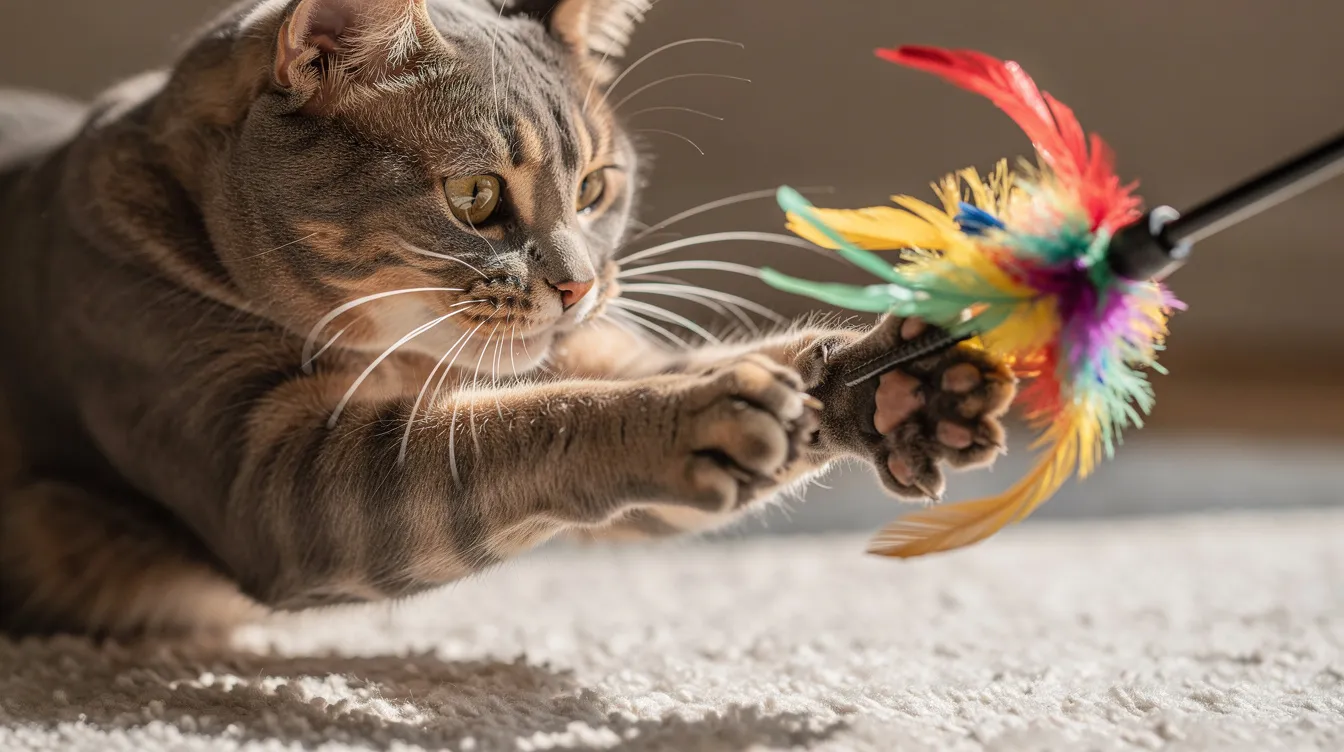
When people think their cat “likes purple,” it’s usually because the purple object offers good blue contrast, has an interesting texture, or moves in an engaging way. That purple feather wand you bought in 2024? Your cat chases it because cats are attracted to the flicking motion and rustling sound, not the violet hue. A lavender blanket might be naturally drawn to by your kitty because of its soft fabric feel, not because they can distinguish it from a gray or blue option.
Understanding Cats’ Visual Capabilities
When it comes to color vision, cats experience the world in a much more limited way than humans do. While human eyes are equipped with three types of cone cells that allow us to see a vibrant color spectrum—including reds, greens, and blues—cats have only two types of cones. This means the range of colors cats can perceive is restricted mostly to shades of blue, yellow, and gray. The absence of the third cone type makes their color spectrum narrower, so many colors that appear vivid to us simply blend into muted tones for our feline friends.
Despite this limited color vision, cats’ eyes are incredibly sensitive to their environment. Their vision is finely tuned to detect even the slightest movement, which is far more important for a natural hunter than distinguishing between every shade in a rainbow. So, while your kitty might not appreciate the full array of colors humans see, their world is still rich in subtle shades and contrasts that help them navigate, play, and stalk with precision. Understanding these differences in how cats see colors can help you choose toys and accessories that stand out in their eyes, even if they don’t look as vibrant to us.
How Cats See Colors (Including Purple)
Cats have different eyes than humans, built for dawn and dusk hunting rather than admiring rainbows. Their vision prioritizes detecting prey movement in low light conditions over appreciating the full color spectrum.
Humans are trichromatic with three cone types sensitive to red, green, and blue wavelengths. Cats are effectively dichromatic, possessing only two functional types of photoreceptor cells:
|
Cone Type |
Peak Sensitivity |
What It Detects |
|---|---|---|
|
Short-wavelength |
450-460 nm |
Blue-violet |
|
Medium-wavelength |
550-560 nm |
Yellow-green |
Because cats lack a true red-sensitive cone, colors based on red—including orange, pink, many browns, and the red component of purple—appear muted or shifted toward shades of gray. Brown, like red and orange, is seen by cats as a dull or grayish hue. A 2016 study published in PubMed confirmed this dichromacy through behavioral testing, establishing cats’ vision as nearly identical to human deuteranopes (red-green colorblind individuals). Dogs also have dichromatic vision, but their color perception is slightly different from cats, as both species see a limited range of colors compared to humans.
Cats' vision evolved for excellent night vision, requiring only about 1/6th the light humans need. Their tapetum lucidum creates that distinctive glow in dark conditions, while their higher rod-to-cone ratio means a world of clearer blues, muted yellow-greens, and extensive shades of gray. This limited color perception actually helps cats hunt, as it allows them to focus on detecting movement rather than being distracted by color.
The Visible Spectrum for Cats
The range of colors cats can see is much narrower than what humans experience. The visible spectrum for cats includes mostly blues, yellows, greens, and a wide variety of grays. While colors like blue and green are somewhat visible to cats, they appear less vibrant and more subdued than they do to us. In low light conditions, cats excel, thanks to a high concentration of rods in their retinas, allowing them to see up to six times better than humans in the dark. However, this adaptation comes at the cost of color sensitivity. For instance, purple objects may look blue to cats, while orange and red items might be mistaken for shades of gray or green. Cats can distinguish between different shades of gray with ease, but their ability to tell apart other colors is limited. When choosing toys, clothing, or accessories for your kitty, keep in mind that items with strong blue or yellow-green tones are more likely to catch their attention, while reds, pinks, and oranges may simply blend into the background.
How Cats See the World
Cats see the world through eyes that are perfectly adapted for life as stealthy predators. Unlike humans, who rely on a broad range of colors to interpret their surroundings, cats are experts at seeing in low light conditions—think dawn, dusk, or even near pitch black. This is thanks to a high concentration of rod cells in their retinas, which are highly sensitive to light and movement. As a result, cats can spot the faintest flicker or the tiniest twitch, even when the world looks dark to us.
Another fascinating feature of feline vision is the tapetum lucidum, a reflective layer behind the retina that bounces light back through the eye. This gives cats’ eyes that signature nighttime glow and boosts their ability to see in environments where humans would be nearly blind. While the range of colors cats see is limited, their ability to detect movement and navigate in low light is unmatched. Whether they’re waiting to pounce on a toy or exploring a dimly lit room, cats rely on these specialized visual skills to interact with their world and hunt effectively. So, while your cat may not see every color in your living room, they’re always tuned in to the slightest change in light and motion around them.
What Does Purple Look Like to a Cat?
Purple for humans is “red plus blue,” but cats only really register the blue component well. The red portion essentially falls into invisibility or gray.
Here’s how common purple items appear to cats:
-
Royal purple toys: Medium to dark blue, sometimes slightly duller
-
Violet scratching posts: Blue-ish gray tones
-
Lavender throws: Faint cold gray or washed-out blue
-
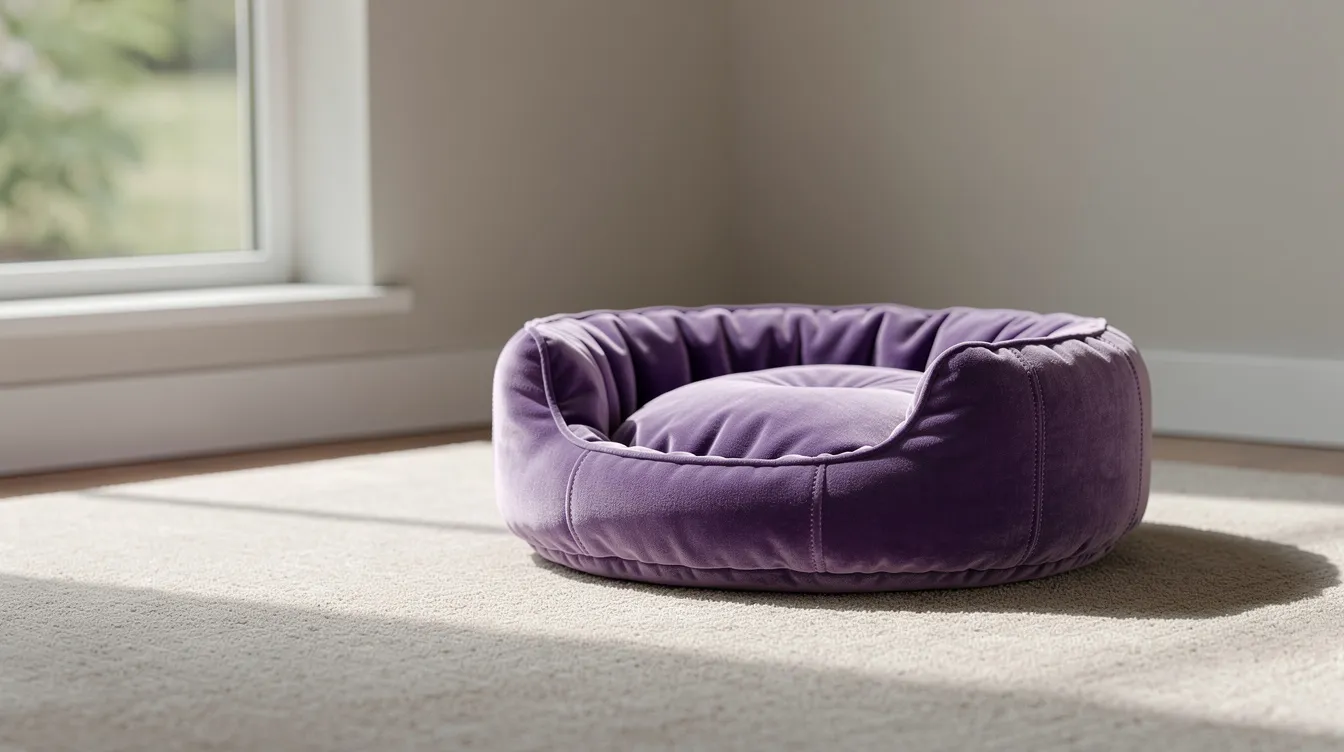
Lilac cat beds: Pale bluish gray, especially under LED lighting
A bright purple cat teaser bought in 2025 likely reads as strong blue to your cat. That soft lilac cat cave popular on Etsy? It probably appears as pale bluish gray to felines. Because cats cannot separate purple from blue the way humans do, they genuinely cannot form a unique preference for purple distinct from their response to other blue tones.
Do Cats Have a Favorite Color at All?
While no study proves a single universal favorite color for cats, research suggests they respond most strongly to blues and some yellow-green shades simply because these fall within their visible range.
Blue toys, bowls, and blankets stand out sharply against common home backgrounds like wood floors, beige carpets, and gray sofas. The color green in its yellowish-chartreuse form remains reasonably visible, though more muted than it appears to humans.
Practical recommendations:
-
A purple item skewing very blue might get the same positive reaction as an explicitly blue object
-
When choosing between red, green, or purple versions of a toy, pick the most blue-heavy option
-
Yellow-green accents can provide good visibility for cats
-
Avoid assuming cats hate certain colors—they simply see a more limited spectrum
Movement, Contrast, and Texture: What Really Matters to Cats
Color plays a secondary role in feline life. Their hunting-adapted vision prioritizes motion, contrast, and overall brightness above any specific hue.
A dangling purple wand toy excites cats because it flicks and rustles—if the same toy were gray but moved identically, your cat would still chase it with enthusiasm. Motion detection in cats is 2-3 times better than humans in peripheral vision, making movement the primary trigger for predatory behavior.
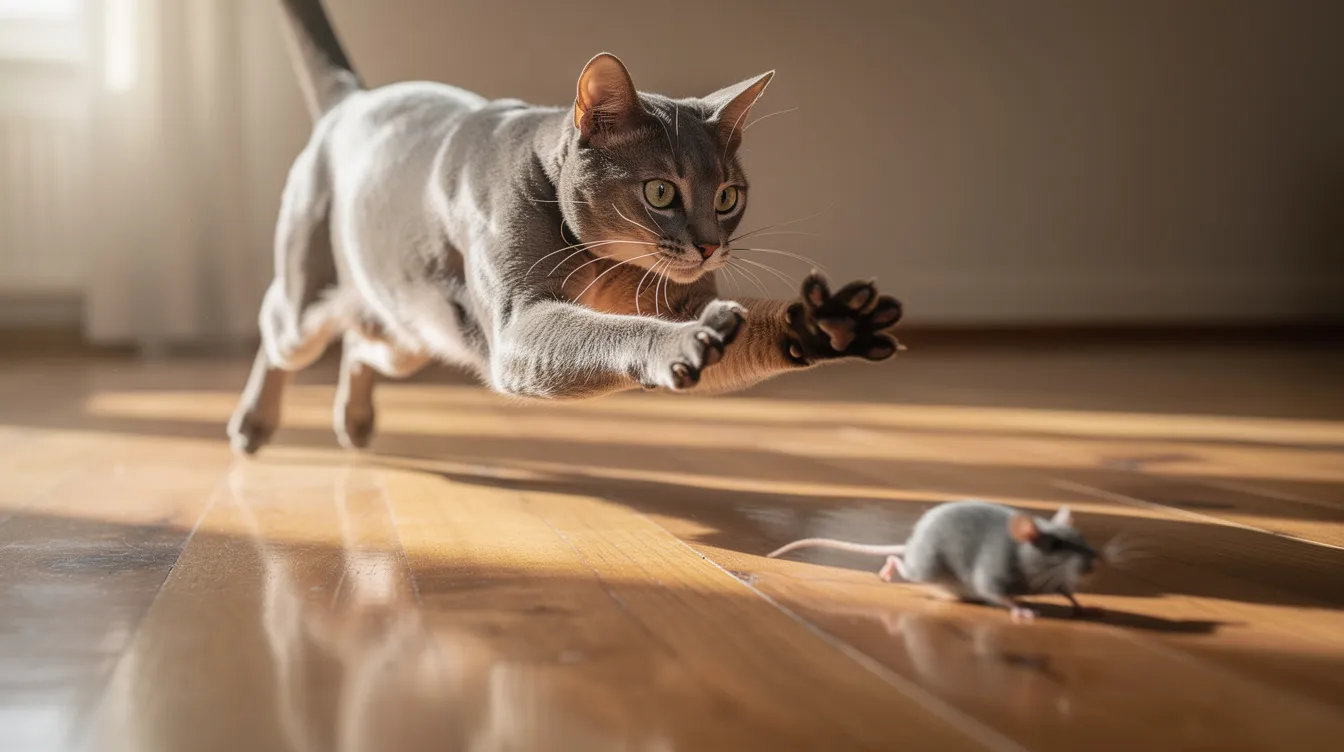
Contrast matters more than color:
-
Dark “purple” (blue-ish to cats) mouse on light beige rug = highly visible
-
Same toy on matching gray sofa = easily ignored
-
Crinkly tunnels engage through sound regardless of color
-
Sisal scratching posts attract via texture, not appearance
When buying new gear in 2026, prioritize toy design, motion features (spring rods, wobble bases), and placement against contrasting backgrounds over focusing solely on color labels.
Calming or Stressful Colors for Cats (Where Purple Fits In)
Some colors and brightness levels influence how relaxed or tense a cat feels, particularly in confined spaces like carriers or veterinary offices. When you head to the veterinarian, consider bringing calming items or colors, such as a pastel purple or blue blanket, to help reduce your cat's anxiety or stress during visits.
Generally calming:
-
Soft blues and gentle greenish pastels
-
Mid-tone grays
-
Pastel purples (which read as subdued blue-gray to cats)
Potentially stressful:
-
Bright, highly reflective white objects
-
Glossy surfaces that create glare
-
Very dark rooms with poor contrast
Veterinary clinics and shelters have increasingly used pale blues and greenish pastels since the 2010s instead of stark white walls specifically because animals are less stressed in these environments. Cats are sensitive to more light than humans expect, making glaring whites uncomfortable.
Practical suggestions for 2026:
-
Use a soft blue-toned or pastel-purple blanket over carriers during vet trips
-
Choose muted bedding for resting spots
-
Avoid shiny white plastic bowls if your cat seems uneasy around them
How to Choose Toys and Accessories if You Love Purple
Many humans enjoy decorating with purple and want to know if that’s compatible with cat ownership. Good news: you can safely choose purple items with a few considerations.
What works well:
-
Rich, blue-heavy purples that show up clearly to cats
-
Mixing purple with contrasting elements (dark navy, light gray, muted yellow-green)
-
Violet cat trees with pale gray platforms for good contrast
-
Purple food bowls on tan mats rather than dark wood floors
If your cat ignores a purple item:
-
Try changing its placement for better background contrast
-
Add movement (attach to wand, use spring base)
-
Include catnip or treats
-
Don’t assume the cat dislikes purple itself—the issue is usually visibility or engagement
Conclusion on Feline Color Preferences
In summary, while cats are not completely color blind, their color vision is much more limited than that of humans. They see the world in a palette dominated by blues, yellows, greens, and many shades of gray, with reds and oranges largely absent from their view. This means that when it comes to choosing toys, bedding, or even decorating a room for your cat, focusing on movement, contrast, and texture will have a much greater impact than the specific color. Cats are naturally drawn to objects that stand out against their environment, especially those that move or have interesting textures. By understanding how cats see and what colors cats can actually perceive, you can create a more engaging and comfortable space for your feline friend. If you found this article helpful, remember that your cat’s world is shaped more by light, contrast, and activity than by any particular shade—so let your creativity shine when picking out the next accessory or toy for your kitty!
FAQ
Can cats tell the difference between purple and blue?
Most evidence suggests cats cannot reliably distinguish purple from blue because both colors stimulate the same blue-sensitive cones, and they lack strong input from red-sensitive cones to perceive the difference. To a cat, a royal purple ball and a navy blue ball placed side by side will likely look like two slightly different shades of “blue-gray,” not dramatically different colors. Any preference your cat shows between them is more likely due to brightness, texture, or scent rather than the subtle color difference.
Do cats like dark or light colors better?
Cats do not show a proven universal preference for dark versus light colors. What matters more is contrast with the background and overall light level. In dim evening light, slightly lighter toys and beds may stand out better against dark floors. In bright daylight, mid-tone blues and grays can be more comfortable on feline eyes than very bright whites. Test a few options at home to see which your individual cat notices most.
Is purple a bad choice for a cat room or cat tree?
Purple is not a bad choice at all. To cats, it mostly reads as another shade of blue or gray, which is generally fine. Use mid-tone or soft purples rather than neon or highly reflective finishes to avoid unnecessary visual glare. Pairing purple cat trees with neutral walls (soft gray, beige) and good natural lighting helps cats see and navigate the structures safely.
Can I use purple to help calm my anxious cat?
There’s no direct evidence that cats find purple itself uniquely calming, but soft purplish fabrics typically appear to them as gentle blue-gray, which is often used in calming environments. Combine a pastel purple blanket with other proven strategies: pheromone diffusers, predictable routines, and safe hiding spots. Avoid very dark purple rooms with poor lighting, as cats rely heavily on visual contrast to feel secure when jumping and climbing.
Why does my cat ignore some purple toys but love others?
Your cat’s reaction is driven by movement, texture, sound, and smell far more than the labeled color on the packaging. A static plush purple mouse on a dark sofa might blend into the background and be ignored, while a similar toy attached to an elastic wand or sprinkled with catnip becomes irresistible. Rotate toys, add variety in shape and motion, and place items where they contrast with surrounding furniture—regardless of whether they’re advertised as purple, blue, or any other color.
Because cats rely more on movement, contrast, and texture than on color itself, creating an engaging and comfortable environment is often more important than choosing a specific shade like purple. Toys that move unpredictably or encourage natural hunting instincts tend to capture a cat’s attention far more effectively than brightly colored objects alone.
For example, interactive options like the Michu Interactive Feathered Cat Toy Box and the Michu Silver Vine Plush Toys are designed to stimulate chasing, pouncing, and play behaviours that align with a cat’s natural instincts. At the same time, comfort and space also play an important role in how relaxed a cat feels in its environment. A spacious setup like the Stella XXL Cat Litter Box gives cats more room to move naturally, which can reduce stress and support more comfortable daily routines.
While cats may not truly “see” purple the way humans do, combining comfortable spaces, engaging textures, and interactive movement can help create an environment that naturally keeps them curious, active, and relaxed.
You can explore these cat-friendly essentials at Michu to build a more stimulating and comfortable space for your cat.