


A clean litter box is one of the simplest things you can do for your cat's health, yet the process trips up a lot of owners. This guide walks through exactly how to change kitty litter, how often to do it based on your litter type and household, and how to spot the warning signs that your schedule needs adjusting.
Key Takeaways
-
Scoop your cat's litter box daily and completely change the litter on a regular schedule. For clumping litter, that means a full change every 1 to 2 weeks. Non clumping litter and pellet litter typically need more frequent changes, every 2 to 5 days depending on odor and wetness.
-
"Changing kitty litter" means this: dump all the old litter, wash and dry the litter box, then add fresh litter to the recommended depth of 2 to 3 inches.
-
Dirty litter boxes cause ammonia buildup, bacterial growth, and strong odor in the house, and they can push cats to pee or poop outside the box.
-
Clumping cat litter absorbs urine and controls odors better than non clumping varieties, so it generally lasts longer between full changes.
-
Stick with mild soap, warm water, and optional baking soda when cleaning; harsh chemical cleaners and strong perfumes can drive cats away from the box.
Why Changing Kitty Litter Really Matters
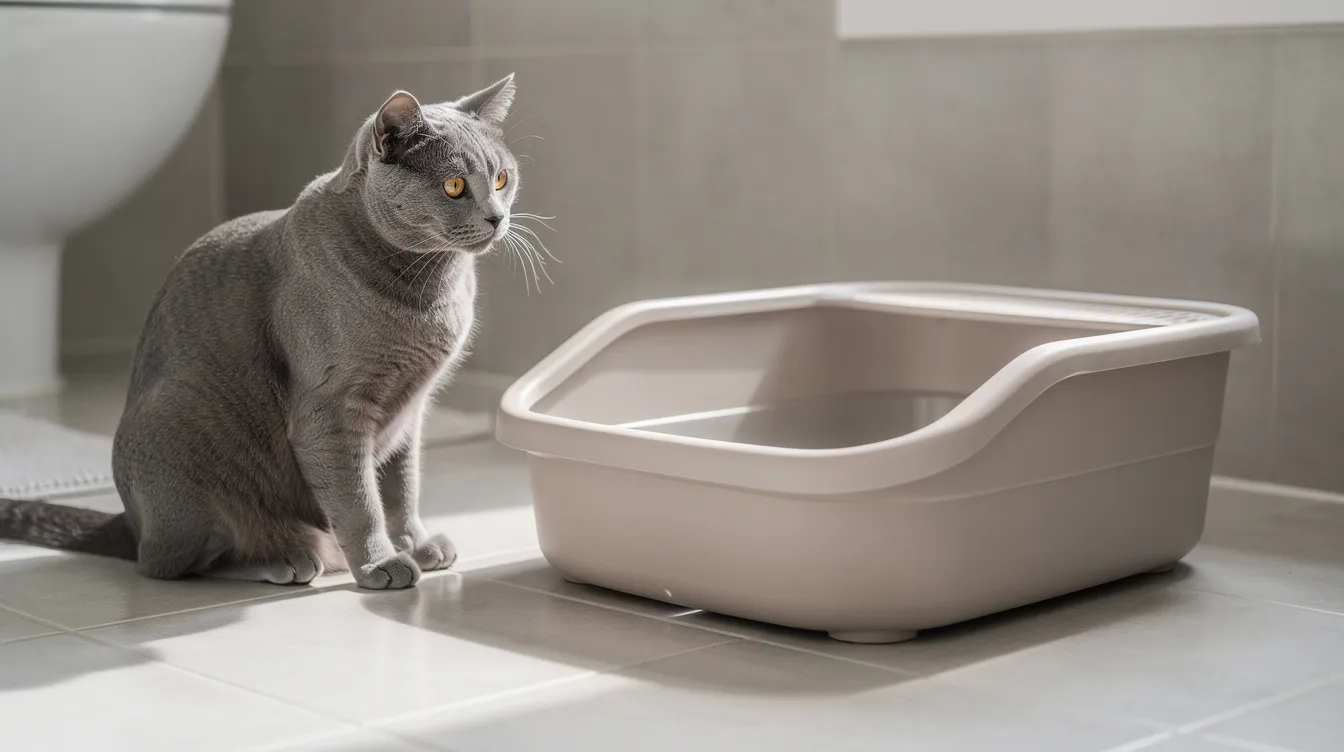
Your cat's litter box is an indoor toilet. When the litter inside it stays dirty, the consequences reach both your cat's health and your home's air quality. Maintaining a clean litter box ensures cats stay healthy and comfortable enough to keep using it consistently.
Cat urine breaks down into ammonia over time. In closed rooms or during winter months when windows stay shut, ammonia fumes from old litter can cause respiratory issues for humans and cats alike. The CDC's guidance on indoor ammonia exposure notes that elevated levels irritate eyes, throats, and airways. Old litter builds up bacteria and can irritate cats' noses, compounding the problem.
Wet, dirty litter is a breeding ground for bacteria, parasites (including Toxoplasma gondii), and mold. Parasites in cat feces can transmit to humans. Children, older adults, and pregnant individuals face higher risk from these pathogens. Failure to change litter can lead to serious health issues for cats as well, including urinary tract infections made worse by unsanitary conditions.
Cats are clean animals by instinct. When the litter box isn't clean enough, most cats will search for a cleaner spot, leading to dirty litter-related accidents on floors, rugs, or furniture. A consistently clean box also helps you notice early changes in your cat's bathroom habits: straining, more frequent urination, or diarrhea that could signal illness.
How Often Should You Change Cat Litter?
There are two separate tasks here. Daily scooping means removing clumps and solid waste each day. A full litter change means you empty all the litter, wash the box, dry it, and refill with new litter. Both matter, but they happen on different timelines.
Here are practical schedules for one cat in a standard-sized box:
|
Litter type |
Scoop frequency |
Full change frequency |
|---|---|---|
|
Clumping clay |
Daily |
Every 1–2 weeks |
|
Non clumping clay |
Daily (remove solids) |
Every 2–3 days |
|
Silica crystal |
Daily (remove solids, stir crystals) |
Every 3–4 weeks |
|
Plant-based, wood, corn, paper |
Daily |
Every 5–10 days |
Clumping litter needs changing every 1 to 2 weeks because clumping litter absorbs urine and controls odors better than alternatives. Non clumping litter should be changed every 2 to 3 days because it saturates uniformly and odor control drops fast. Silica gel litter can last 3 to 4 weeks before changing, according to Fresh Step's product guidelines, assuming you scoop solids and stir the crystals daily.
Using high-performance litter can extend time between changes, but these numbers are starting points. If you notice strong smells, soggy litter, or your cat avoiding the box, change the litter sooner. The litter box should be emptied every 2 to 4 weeks at minimum, regardless of type.
What Affects How Often You Need to Change the Litter?
How often you should change cat litter is not a fixed answer. It shifts based on your household setup, your cat's habits, and even the room where the box sits.
The number of cats is the single biggest variable. Change litter based on the number of cats in the household. If you have two cats, you need at least two litter trays, and you should plan on more frequent changes: weekly for clumping, every 1 to 3 days for non clumping. For homes with multiple cats, BISSELL's maintenance guide recommends full clumping litter changes every 1 to 2 weeks and non clumping every 4 to 5 days. The rule of thumb is one box per cat plus one extra.
Box size and depth matter too. Smaller, shallow litter trays fill up and get dirty faster than larger, deeper ones. A litter pan that holds more substrate gives you slightly more time between full changes if you scoop daily.
Warm rooms with poor ventilation, like small bathrooms or utility closets, trap odor and accelerate ammonia buildup. Those litter boxes need more frequent cleaning. Your cat's habits also play a role: some cats dig deeply and scatter litter outside the box, while others barely cover their waste. Both extremes change how quickly the litter becomes unusable.
How to Change Kitty Litter Step by Step
This is the core process for a full litter box clean, from start to finish.
Gather your supplies near the cat's litter box before you begin: disposable gloves, a litter scoop, a strong trash bag, mild soap (fragrance-free dish detergent works well), a sponge or scrubber, paper towels, and optional baking soda. If the box has heavy ammonia smell, wear a mask.
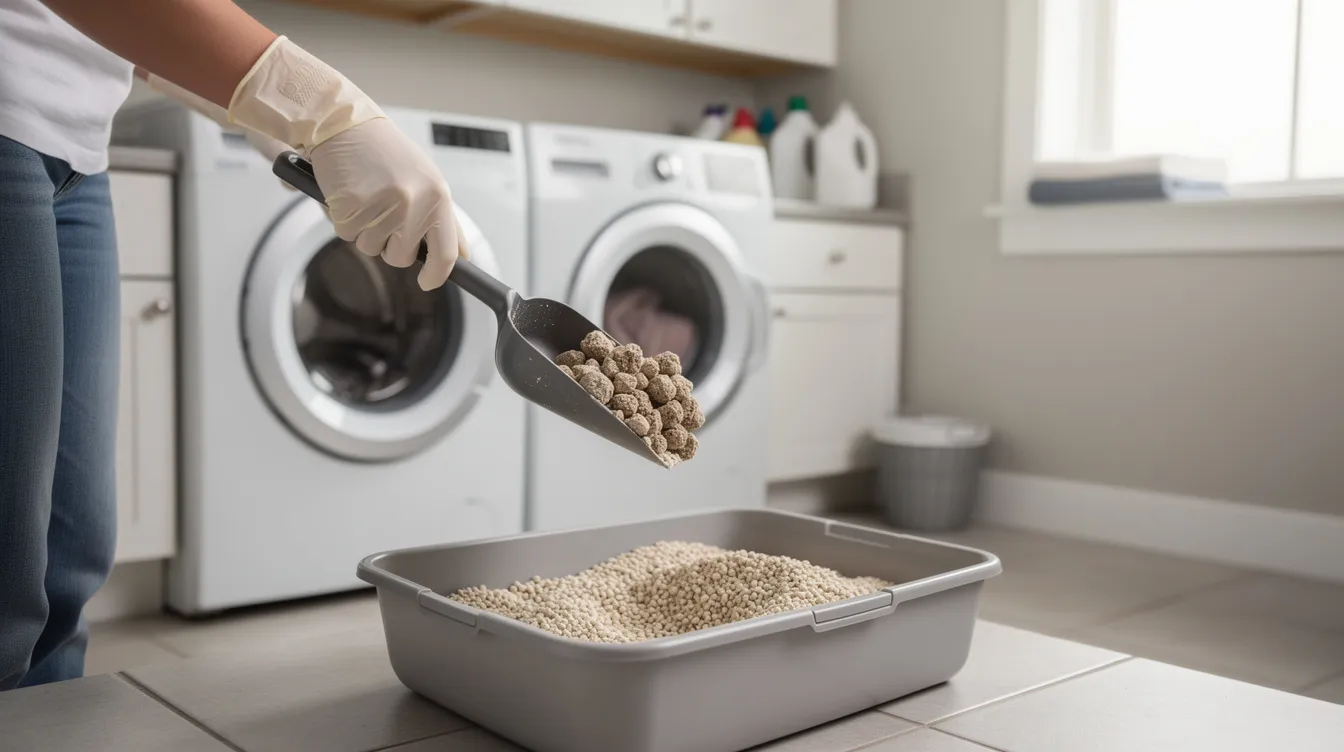
Move the litter box to a ventilated area if possible; a balcony or a laundry room with an open window reduces ammonia exposure. Keep your cat out of the way while you work.
Dump all the old litter into the trash bag. Tap the sides and bottom of the box gently to dislodge any stuck clumps or dried waste. Tie the bag tightly. If the litter is very wet or the smell is strong, double-bag it.
Wash the empty litter pan with warm water and a mild, fragrance-free soap. Scrub corners, edges, and any stained or discolored areas. Rinse thoroughly so no soap residue remains; cats can detect and dislike leftover detergent scent. Wash the litter box monthly with mild dish soap at minimum; thoroughly clean the litter box at least monthly even if you spot-clean in between.
The box must be completely dry before you add fresh litter. Air-dry it or towel-dry it. Pouring litter into a damp box promotes bacterial growth on the plastic surface and can prevent clumping litter from forming proper clumps.
How Much Fresh Litter to Add (and How to Keep It Fresh)
Adding the right depth of fresh litter lets cats dig comfortably and keeps odor control effective between full changes. Too shallow, and urine reaches the box floor. Too deep, and you waste litter without any benefit.
Litter should be maintained at a depth of 2 to 3 inches for most adult cats using clumping clay. If your cat digs heavily and you have a deeper box, 3 to 4 inches works. For pellet litter or paper-based litters, manufacturers often recommend slightly deeper layers because pellets break down as they absorb urine; check the bag's instructions for the recommended depth.
After pouring in new litter, gently shake or tilt the box so the surface is level. Hollows and slopes trap waste and make scooping harder.
Before adding the litter, you can sprinkle a very thin layer of unscented baking soda across the bottom of the clean, dry box. This helps absorb odors without overwhelming your cat's sense of smell. Use it sparingly; a heavy layer can create dust and irritation.
Between full changes, add litter after each scoop session when the depth drops below 2 inches. Topping off keeps your cat comfortable but does not replace a full litter change, because soaked and soiled litter remains underneath the fresh layer.
Keeping the Litter Box Clean Between Full Changes
Daily maintenance prevents dirty litter from becoming overwhelming and makes each full change quicker. Daily scooping is essential for maintaining litter freshness, and scoop daily to maintain cleanliness; these two habits alone cut down on odor and bacterial growth.
Here is a simple daily routine: scoop out all solid waste and urine clumps at roughly the same time each day, using a sturdy scoop that matches your litter type (fine mesh for clumping, wider slots for pellets). Daily scooping prevents odor buildup in litter boxes and lets you monitor your cat's output for health changes.
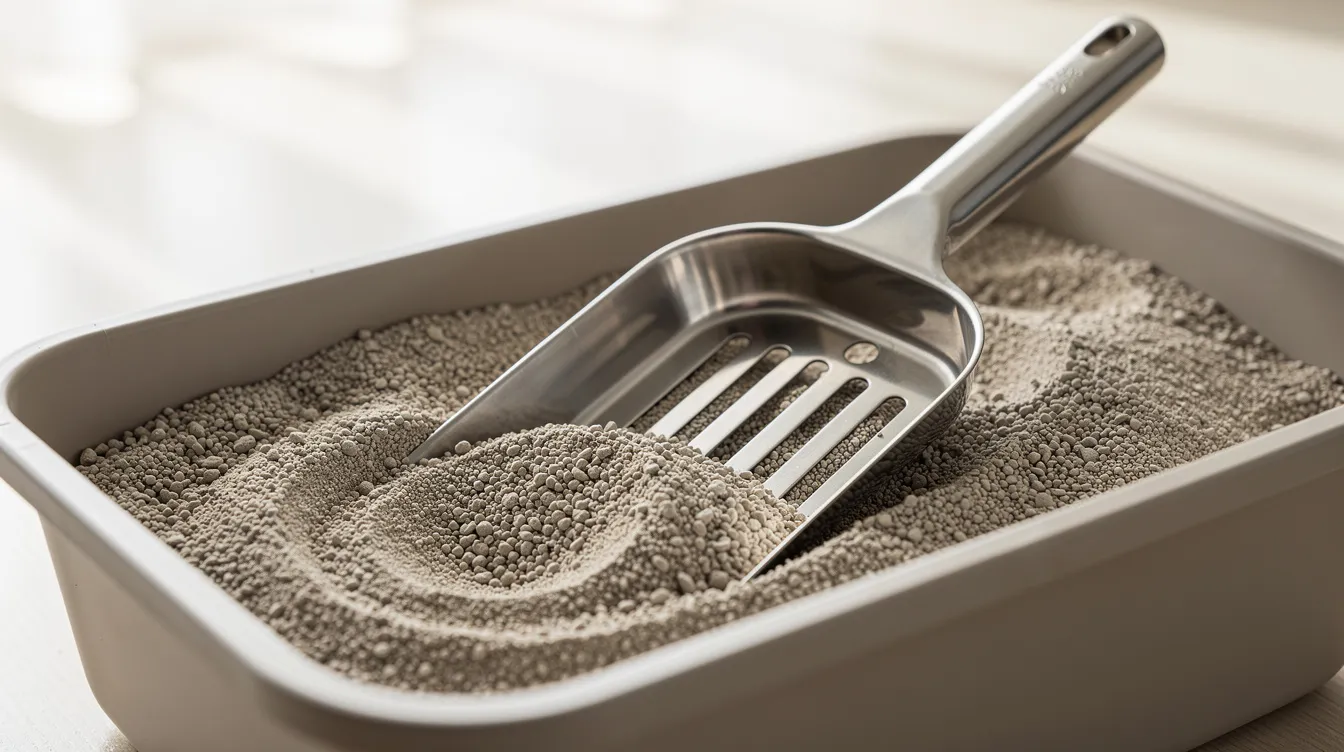
Right after scooping, check the litter level and add fresh litter as needed so your cat always has enough depth to dig and cover waste properly. Once or twice a week, wipe the box's rim and entry area with a damp cloth to remove stuck litter and dust, especially on high-sided or covered boxes.
A litter mat placed in front of the box catches stray grains, reduces tracking through the house, and cuts down on wasted litter. A quick visual and sniff test every day, looking for soggy corners, dark patches, or strong odor, tells you whether the box needs a full, unscheduled change. Ammonia buildup from old litter causes strong odors that daily scooping alone cannot fix once the base layer is saturated.
Signs It's Time to Change the Litter Now (Even If It's "Not Time Yet")
A calendar schedule helps, but your nose and your cat's behavior are better indicators than any fixed timeline.
A strong, sharp ammonia smell near the litter box, even right after scooping, means the remaining litter is saturated and the entire box needs to be completely changed. No amount of topping off will fix a strong odor at this stage.
Visible clues include litter that looks dark, soggy, or muddy at the bottom; clumps that fall apart or smear when scooped; and dirty litter sticking to the sides or floor of the box. If you notice any of these, skip ahead to a full change.
Behavioral signs are just as telling. A cat hesitating before entering, scratching the floor nearby instead of the litter, or suddenly eliminating just outside the box are all forms of litter box avoidance. Dirty litter can lead to cats urinating outside the box, and once that pattern starts, it gets harder to break.
If the box is overdue and your cat has already had an accident elsewhere, do two things: deep cleaning of the litter box (full dump, wash, dry, refill), and cleaning the accident area with an enzymatic cleaner to remove lingering scent so the cat does not return to that spot.
How to Change Litter Types or Brands Without Stressing Your Cat
When people say "change kitty litter," they sometimes mean switching from one litter type to another, like moving from clay to wood pellets or swapping brands. Cats prefer consistency in their bathroom habits, so a sudden switch can cause confusion or refusal.
Gradually transition to a new litter type to avoid aversion. A six- to seven-day process works for most cats: on days 1 and 2, fill most of the cat's litter box with the old litter and mix in about one-third of the new litter. By days 5 through 7, increase the new litter proportion until the box contains almost entirely new litter. Watch for signs of litter box avoidance during transitions.
Keep the same litter box in the same location during the switch. Changing the substrate and the box and the spot all at once gives the cat too many variables. Offer a secondary litter box with the old litter during the switching process so the cat always has a familiar option.
If your cat stops using the box during the transition, revert to the previous mix and slow down. If refusal continues beyond a few days, consult a vet.
For special cases: kittens under about four months should use non clumping litter to reduce risk if they ingest granules. Senior cats and cats with respiratory issues often do better with unscented, low-dust options. Choose unscented litter to prevent cats from avoiding the box; personal preference among people's cats varies, but scent-free is the safer default. Slower, more cautious transitions work best for these groups.
Health and Safety Tips When You Change the Litter
Handling dirty litter safely protects both the cat and every person in the house, especially those with weaker immune systems.
-
Wear disposable gloves when scooping or doing a full litter change. Wash hands thoroughly with soap and warm water afterward, even if you wore gloves.
-
Pregnant people or immunocompromised family members should avoid changing litter because of the risk of Toxoplasma gondii. The CDC recommends that pregnant individuals delegate this task. If they must scoop, gloves and a mask are non-negotiable.
-
Avoid harsh chemical cleaners like bleach or ammonia-based products directly in the litter box. Harsh smells can deter cats, and ammonia fumes combined with cat urine odor are overwhelming. Use mild, fragrance-free soap to clean the litter box instead.
-
Bag used litter securely and place it in household trash. Never flush clumping or crystal litter; it clogs plumbing and is not designed for wastewater systems.
-
After a deep clean, especially if the box was very dirty or the smell was strong, ventilate the room. Open a window or turn on a fan for 10 to 15 minutes.
Inspect your old box periodically. If the plastic is heavily scratched or permanently stained, odor and bacteria hide in those grooves regardless of how well you clean. A new box every 1 to 2 years keeps things sanitary.
FAQs About Changing Kitty Litter
These questions come up often once cat owners start following a regular schedule for litter box maintenance.
Can I just add fresh litter on top instead of changing it completely?
Topping off maintains depth and is useful between changes, but simply covering dirty litter with fresh litter does not remove bacteria, soaked-in urine, or odor trapped at the bottom. You should still fully empty, wash, dry, and refill the box on a regular schedule. How many cats you have and what type of litter you use determines that schedule, but no household can skip full changes entirely.
Is baking soda safe to use in my cat's litter box?
Plain, unscented baking soda sprinkled in a very thin layer under the litter is generally safe and helps absorb odors. Avoid heavily perfumed litter additives or dumping in large amounts; strong smells and excess dust can irritate a cat's nose and may trigger litter box avoidance. A light dusting on the clean, dry box floor before you add litter is enough.
How often should I completely change the litter in a multi-cat home?
Provide at least one box per cat plus one extra, and scoop each box once or twice daily. In a household with more than one cat, clumping litter typically needs a full change weekly. Non clumping litter or pellet litter in a two- or three-cat home needs to be completely changed every 1 to 3 days, depending on how quickly odor and wetness build up. How often you should change depends on how tidy your cats are and how large the boxes are.
Do I need a new litter box if the current one is very scratched or stained?
Heavy scratching over months creates grooves in plastic where bacterial growth and odor persist even after thorough cleaning. Replace an old, badly scratched, or permanently stained box at least every 1 to 2 years, or sooner if a strong odor lingers despite a full wash. A new box paired with fresh litter often solves persistent smell problems that no amount of scrubbing can fix.
What should I do if my cat suddenly stops using the litter box after a change?
First, check that the litter box is clean, filled with a familiar litter type, and placed in its usual quiet spot. If you recently made a large change (new litter, new location, new box), revert it. If your cat strains to urinate, cries in the box, or repeatedly pees outside the box, contact a vet promptly. These signs can indicate a urinary or medical problem rather than a simple litter preference issue. Keeping the cat's health monitored through regular litter box habits is one of the easiest early warning systems available to any cat owner.
Keep Your Cat’s Litter Box Fresh with MICHU
Maintaining a clean litter box starts with choosing the right products. MICHU’s thoughtfully designed litter solutions help reduce odor, improve clumping performance, and make daily litter box care easier for both cats and owners.
🐾 MICHU Tofu Cat Litter
Best for: Everyday freshness & easy cleaning
Made with natural plant-based ingredients, MICHU Natural Clumping Tofu Cat Litter forms firm clumps that are easy to scoop, helping remove waste quickly before odors build up. Its low-dust formula creates a cleaner environment while being gentle on sensitive paws and noses.
✔ Fast clumping for easier scooping
✔ Natural plant-based ingredients
✔ Low dust & gentle for cats
✔ Helps maintain a fresher litter box between full changes
🐾 MICHU Wonder Litter
Best for: Superior odor control & longer-lasting freshness
For cat owners who want fewer litter changes, MICHU Wonder Litter offers powerful absorption and odor control. Its advanced formula helps lock in moisture quickly, reducing the chance of ammonia buildup and keeping the litter box smelling fresher for longer.
✔ Excellent moisture absorption
✔ Strong odor neutralization
✔ Less mess and easier maintenance
✔ Ideal for busy households and multi-cat homes
🐾 MICHU XXL Deluxe Cat Litter Box
Best for: Comfortable cleaning & multi-cat households
A clean litter routine starts with the right litter box. The MICHU XXL Stella Deluxe Cat Litter Box provides a spacious, comfortable area for cats to dig and turn around while making cleaning and maintenance easier for owners.
✔ Extra-large space for cats of all sizes
✔ Helps contain litter scatter
✔ Easy access for regular cleaning
✔ Perfect for homes with multiple cats
With the right combination of high-performance litter and a spacious litter box, keeping your cat’s bathroom clean doesn’t have to be a daily struggle. MICHU helps create a fresher, healthier litter experience for cats and their families. 🐱